Lift-and-Lock Mechanisms: How Cordless Blinds Stay Put at Any Height
"Cordless" isn't a single thing - it's a few different lift mechanisms that all get rid of dangling cords. Understanding them helps you pick the smoothest operation for each window. Here's how the hardware works.
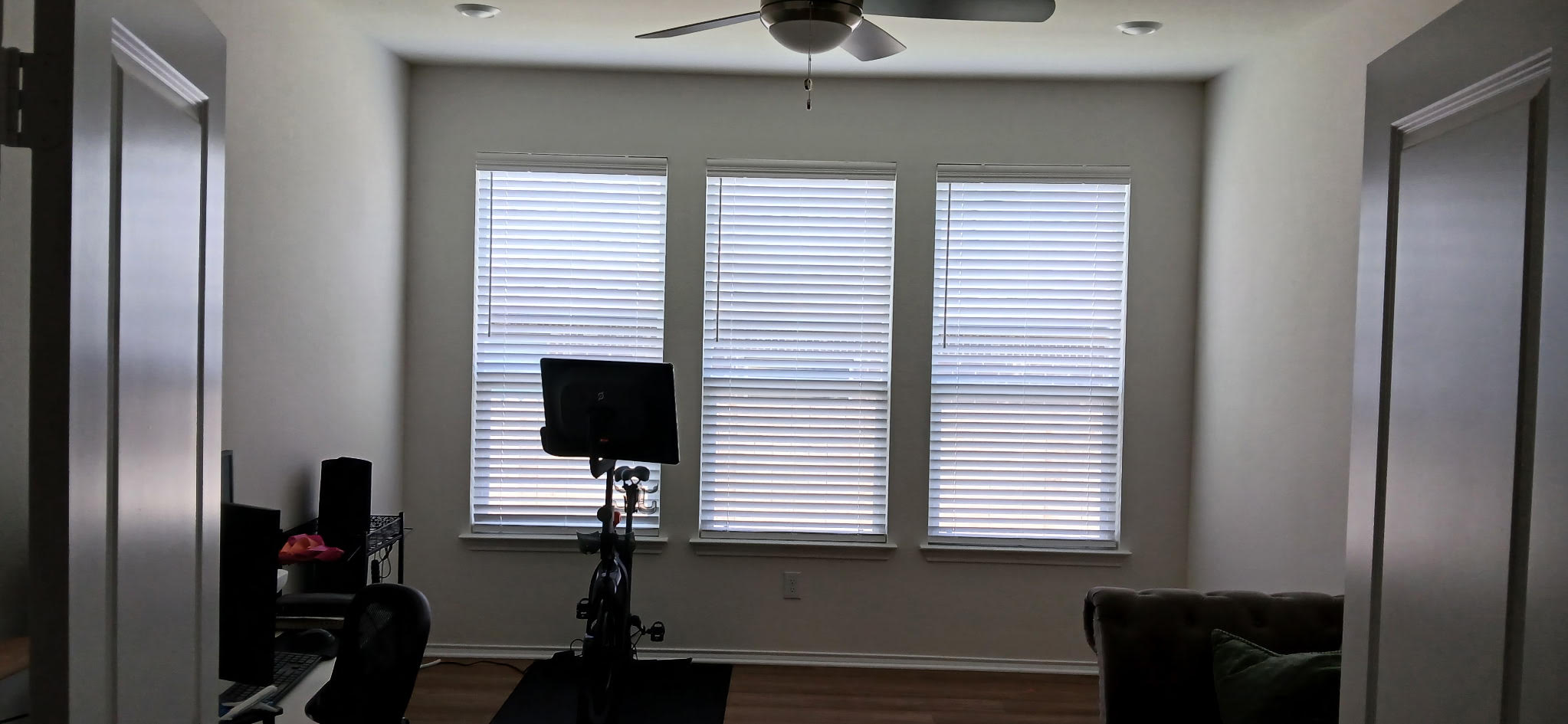
How lift-and-lock works
Cordless window blinds use an internal spring or brake mechanism: you push up or pull down by hand on the bottom rail, and the mechanism locks the blind securely at whatever height you stop. No cords, no cleats - it simply holds where you leave it.
Wands, continuous loops, and motors
- Wand tilt: a slim wand turns to tilt slats, replacing the old tilt cord.
- Continuous cord loop: a single tensioned loop (anchored to the wall for safety) raises large or heavy shades with less effort.
- Motorized: a button or app does the lifting on tall or hard-to-reach windows.
Why it's safer and cleaner
No exposed pull cords means no strangulation hazard - the reason cordless is the child- and pet-safe standard we install by default. It also looks cleaner: nothing hanging down the side of the window, just a crisp treatment.
Where each fits
- Everyday reachable windows: cordless lift-and-lock.
- Large or heavy shades: continuous loop or motorized.
- Tall/hard-to-reach: motorized.
Book a free in-home consultation and we'll match the right lift to each window.
Lift mechanism questions.
How do cordless blinds stay in place?
An internal spring or brake mechanism locks the blind at whatever height you set by hand - it holds without any cords.
Are cordless mechanisms child-safe?
Yes - with no dangling cords there's no strangulation hazard, which is why cordless is the recommended safety standard.
What if a shade is heavy or high?
A continuous cord loop (anchored for safety) or a motor makes large, heavy, or high shades easy to operate.