Faux Wood vs. Real Wood Blinds: Which Is Best for a Texas Home?
Real wood and faux wood blinds look similar on the wall but behave very differently in the Central Texas climate. Here’s how to choose between them room by room.
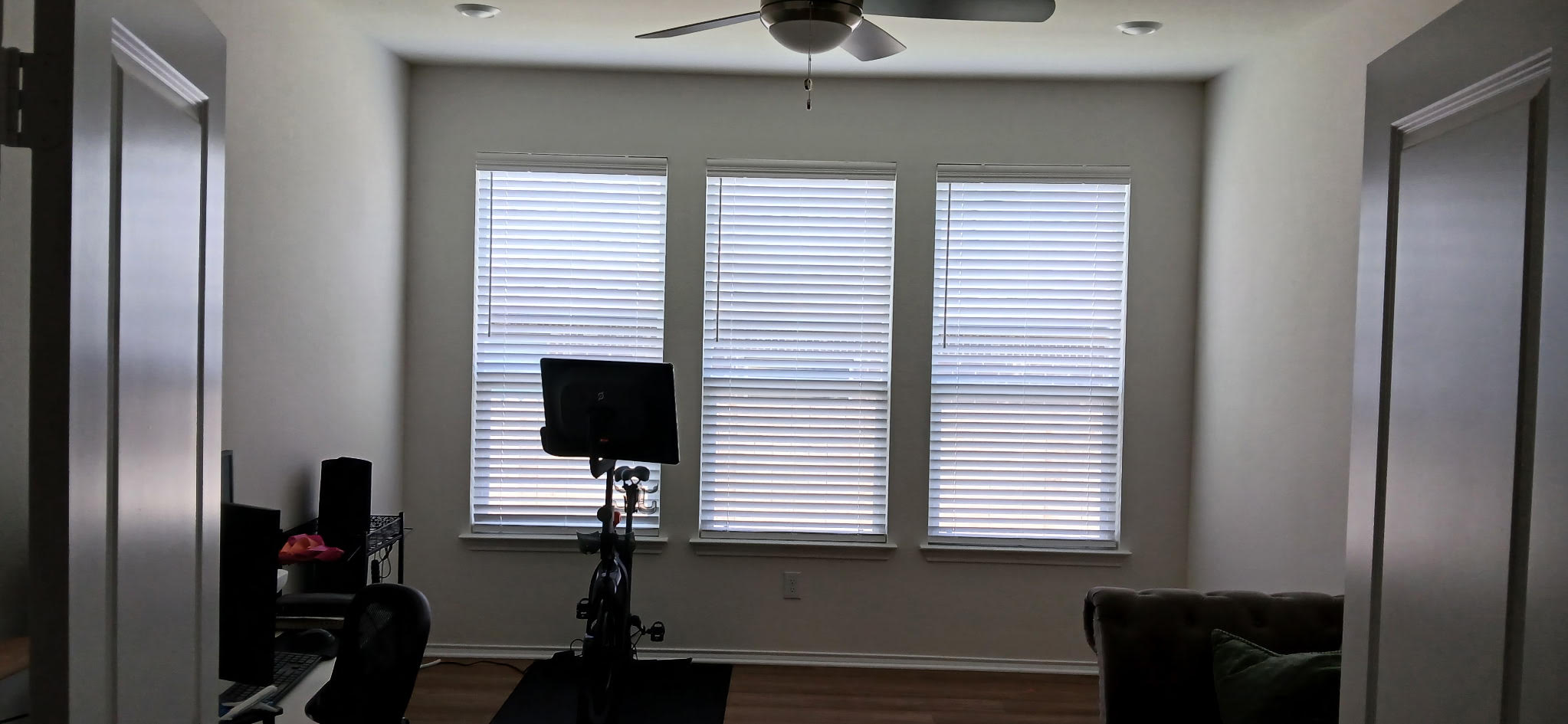
Real wood blinds
Real hardwood blinds are lighter, with a warm, natural grain that’s hard to beat in living rooms, dining rooms, and bedrooms. They take stain and paint beautifully. The trade-off: real wood can warp, fade, or crack in humidity and direct sun, so they’re best in dry, climate-controlled rooms away from harsh afternoon light.
Faux wood blinds
Faux wood (PVC/composite) blinds resist moisture, warping, and fading, which makes them the smart choice for Central Texas bathrooms, kitchens, laundry rooms, and any window that takes strong sun. They’re more budget-friendly and easy to clean, while still giving you the look of painted wood. See options on our window blinds page.
How to choose
Humid or sunny rooms: faux wood. Living room/bedroom/dining (dry, shaded): real wood for the premium look, or faux to save. Budget whole-home job: faux throughout. Want the richest grain: real wood in dry rooms. For many Central Texas homes the best answer is a mix.
Faux wood and real wood questions.
Do faux wood blinds look cheap?
No — quality faux wood mimics painted wood closely, and most people can’t tell the difference on the window.
Will real wood blinds warp in Texas?
They can in humidity or direct sun, which is why we recommend faux wood for baths, kitchens, and sun-facing windows.
Which costs less?
Faux wood is generally more budget-friendly than real hardwood.